AI Real Estate Farming in 2026: How to Win Listings in Your Neighborhood
AI real estate farming is the 2026 upgrade to a strategy agents have used for decades: pick a neighborhood, become its go-to expert, and harvest the listings. The difference now is that you no longer farm blind. Instead of mailing the same postcard to 2,000 doors and hoping, AI tells you which of those homeowners are most likely to sell in the next 6–12 months — so your time, money, and follow-up land where they actually convert. This guide shows you how to build a modern, data-driven farm step by step.
Table of contents
- What is AI real estate farming?
- Why AI beats the old spray-and-pray farm
- How to build an AI real estate farm in 5 steps
- The tools that power a modern farm
- Mistakes that kill a farm
- FAQ
What is AI real estate farming?
Traditional geographic farming means committing to one area — a subdivision, a ZIP code, a few streets — and marketing to it consistently until you own the mindshare. AI real estate farming keeps that commitment but adds a predictive layer on top. Platforms analyze ownership tenure, estimated equity, life-event signals, refinance activity, and home-condition data across every property in your farm, then score each household by its likelihood to list soon. You still farm the neighborhood, but you prioritize the 5–10% of homeowners the data flags as movers — the people worth a phone call, a handwritten note, and a personal market update, not just a postcard.
Why AI beats the old spray-and-pray farm
The math of old-school farming was brutal: a typical direct-mail farm converts well under 1% per drop, so agents burned thousands of dollars and months of patience before a single listing appeared. Predictive farming compresses that timeline. When a tool like Homesage AI surfaces the 80 households in your 1,500-home farm most likely to sell this year, you can pour your best, most personal marketing into those 80 instead of diluting it across all 1,500. The result is fewer wasted touches, a lower cost per listing, and a farm that pays back faster. It is the same logic behind our guide on how to find motivated sellers with AI — aim at intent, not at addresses.
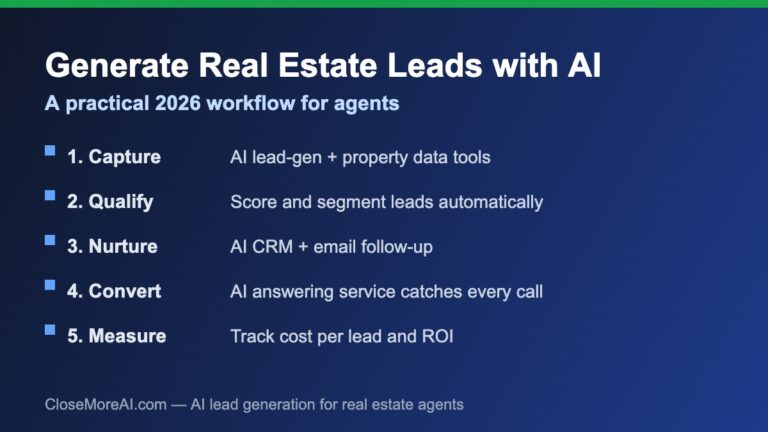
How to build an AI real estate farm in 5 steps
1. Pick a winnable farm. Choose an area with healthy turnover (5–8% of homes sell per year is ideal) where no single agent already dominates. Size it to your budget: 500–2,000 homes is manageable for a solo agent.
2. Layer on predictive data. Feed the farm into a predictive-intelligence platform so every household gets a likely-to-sell score. Book a Homesage demo and ask to see live seller signals for your exact ZIP before you commit a marketing budget.
3. Tier your outreach. Put high-score households on a high-touch track (calls, door-knocks, personal CMAs) and the rest on a low-cost nurture track (monthly email, quarterly mailer). This is where AI saves you the most money.
4. Show up consistently. Farming is a 12–18 month game. Branded market updates, just-sold notices, and genuinely useful neighborhood content compound your authority over time.
5. Measure and re-score. Likely-to-sell scores shift as life events happen, so refresh your list monthly and move households between tiers. For the full lead-gen workflow, see our guide to generating real estate leads with AI.
The tools that power a modern farm
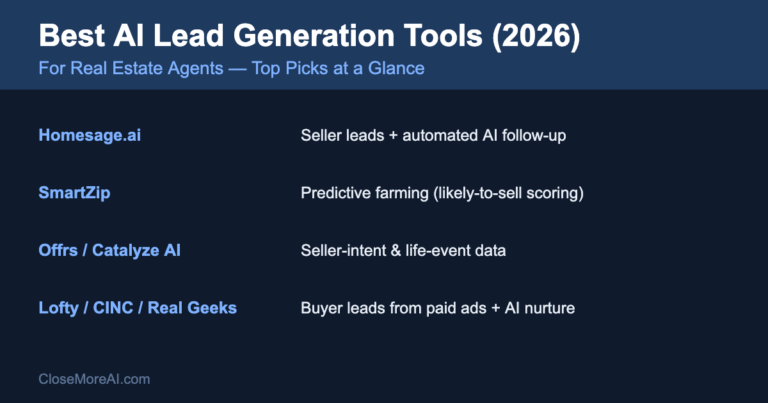
The engine of AI real estate farming is a predictive seller-intelligence platform. Our top pick is Homesage AI, which scores more than 150 million U.S. properties on equity, condition, and likelihood to sell, and lets you work a farm by ZIP — read our full Homesage AI review and pricing guide for the details. If you are weighing alternatives, our Homesage AI vs SmartZip breakdown compares the two best-known predictive-farming options head to head. Pair your chosen platform with a CRM for follow-up and a market-update tool for content, and the farm runs itself. For the broader picture of where farming fits, browse the best AI lead generation tools for real estate.
Mistakes that kill a farm
Three errors sink most farms. The first is impatience — quitting at month four before the compounding kicks in. The second is treating every household the same, which wastes your budget on people who are years from selling; predictive scoring exists precisely to prevent this. The third is weak follow-up: the National Association of Realtors consistently finds that speed and consistency of follow-up are the biggest factors in whether any lead source converts. AI tells you who to chase; you still have to make the call.
Frequently asked questions
How much does AI real estate farming cost?
The predictive-data layer typically runs $200–$1,000 per month depending on coverage and team size, on top of whatever you spend on mailers and content. Because AI concentrates your spend on likely sellers, most agents find the cost per listing drops compared with blanket direct mail.
How big should my farm be?
For a solo agent, 500–2,000 homes is the sweet spot — large enough to produce steady turnover, small enough to market consistently. Teams can go larger because they have more capacity for high-touch follow-up.
How long before an AI farm produces listings?
Expect 6–12 months for the first listings and 12–18 months for the farm to mature. Predictive scoring shortens the timeline by focusing your earliest, best efforts on the homeowners most likely to move now.
Want our free 2026 AI Toolkit for Agents — 25 tools that win listings & close deals? Grab the free toolkit here.