Is Virtual Staging Worth It in 2026? The ROI Data for Real Estate Agents
So, is virtual staging worth it in 2026? For most listings that are vacant or dated and will be marketed online, the answer is yes — and the reason is the lopsided math. AI virtual staging costs a few dollars (or a low flat monthly fee), while traditional physical staging runs into the thousands. Nearly all buyers — around 95% or more, per the National Association of Realtors — start their search online, where your photos do the first showing. This guide runs the ROI the honest way: real cost ranges, a transparent worked example, what the evidence actually supports (and what it doesn’t), and when you should skip staging entirely.
Updated October 2026.
The short answer
Virtual staging is worth it whenever a listing has empty, cluttered, or dated rooms and will be marketed online — which is nearly every listing. The cost is now small enough that it stops being a real decision: a full set of hero photos can be AI-staged for a few dollars, or for a low flat monthly fee if you stage listings regularly. The upside — more clicks, saves, and showing requests on the channels where buyers actually look — compounds across the MLS, Zillow, Instagram, and email from the same one-time edit.
Where it is not worth it: a home that is already furnished tastefully and photographs well, a strict as-is investor sale priced on numbers, or a property whose value is the land. And it is never worth using staging to disguise a condition problem — that costs you trust at the front door, which is far more expensive than any staging fee.

What virtual staging actually costs in 2026
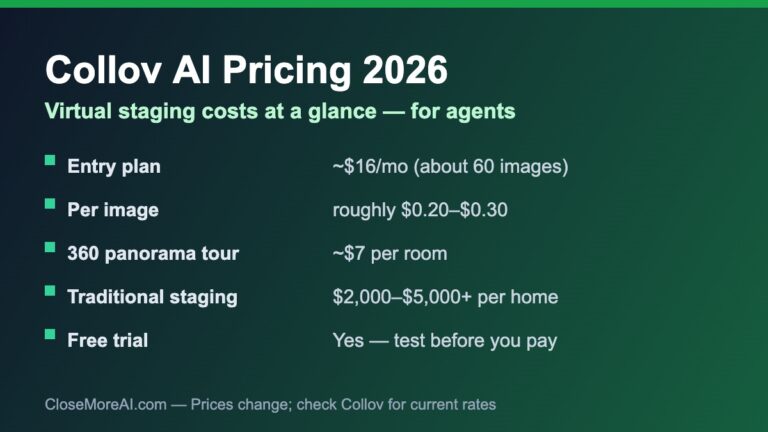
There are three price tiers. The gap between them is the whole ROI story. Pricing below reflects published vendor rates in late 2026 and varies by plan, volume, and turnaround — always confirm the current number on the provider’s own page before you quote it to a seller. Our AI virtual staging cost guide breaks the tiers down in more detail.
| Option | Typical 2026 cost | Turnaround | Best for |
|---|---|---|---|
| AI self-serve (upload, stage it yourself) | ~$0.20–$1 per photo, or ~$16–$29/mo flat on many plans | Seconds to minutes | Agents who stage listings regularly and want control |
| Human-edited virtual staging services | ~$15–$45 per photo | 24–48 hours | One-off listings, tricky rooms, hands-off delivery |
| Traditional physical staging | ~$1,500–$6,000+ per listing | Days, plus monthly furniture rental | High-end vacant homes shown heavily in person |
AI tools have closed most of the quality gap for standard rooms: they render in seconds, add or remove furniture, declutter, and restyle flooring, walls, and lighting. They still struggle with unusual angles, heavy clutter, and architectural oddities, which is where a human-edited service or a reshoot earns its higher price. For a side-by-side of the leading options and how to choose, see our best AI virtual staging tools roundup.
The ROI math: a worked example
ROI is easiest to see when you lay out the two sides explicitly. The example below uses conservative, transparent assumptions — it is an illustration of the economics, not a measured result from a specific set of listings.
- Cost side. Staging 8–10 hero photos with an AI tool: roughly $5–$10 one-off, or a sunk flat monthly fee you are already paying if you stage often. Call it 15 minutes of your time.
- Benefit side. Better listing photos lift click-through and saves on portals and social, which tends to produce more showing requests early in the listing — when demand and pricing power are highest.
- The asymmetry. On a median-priced U.S. home, a single additional competitive showing or offer can move the final price by thousands of dollars, or shave days off the market. You are risking single-digit dollars against an outcome measured in thousands. Even a small, uncertain probability of that outcome dwarfs the cost.
That asymmetry — tiny, certain cost against a large, probabilistic upside — is why virtual staging is one of the few marketing spends where the downside is genuinely trivial. It does not guarantee a faster or higher sale; it buys you better odds on the channels that matter, for the price of a coffee. The honest framing for a seller is exactly that: not “this will add $X,” but “for a few dollars we remove the empty-room objection on every photo buyers see.”
What the evidence actually says
Be careful with the staging statistics that circulate online — many precise-sounding figures (“sells 31% faster,” “73% more offers”) trace back to vendor marketing rather than controlled research, and they are easy to repeat and hard to verify. Here is what is better supported:
- NAR’s Profile of Home Staging reports that a majority of buyers’ agents say staging makes it easier for buyers to visualize a property as their own home, and a meaningful share say it can increase the offer and reduce time on market. NAR frames these as agent-reported effects, not a single guaranteed percentage.
- Buyer behavior is the sturdier data point: NAR consistently finds that nearly all buyers use the internet in their search and that photos are among the most valued features of online listings. Rooms that photograph as empty, cramped, or dated lose attention in the feed — which is the specific problem staging fixes.
- Rigorous, independent studies isolating virtual staging’s effect on price and days-on-market are scarce. Treat the ROI as directional and strongest for vacant or dated homes, not as a precise lift you can promise.
For a deeper look at the “does it actually work” question, see does virtual staging help sell a house faster, and for the physical-vs-virtual trade-off, virtual staging vs traditional staging.
When virtual staging pays off most
- Vacant listings. Empty rooms photograph small and cold and give buyers no sense of scale; staged versions consistently earn more attention. See how to stage a vacant house with AI.
- Dated interiors. Virtual restyling lets buyers see past 1990s decor without forcing a renovation conversation — useful when the seller cannot or will not update before listing.
- Listing-launch marketing. Staged hero shots lift click-through on portal listings, reels, and email blasts from the same edit, so the cost is spread across every channel.
- Pre-listing presentations. Showing a seller their own living room virtually restaged is one of the most persuasive closers in a listing appointment.
When you can skip it
Skip staging when a home is already furnished tastefully and photographs well, when you are selling strictly as-is to investors who buy on numbers, or when the property’s value is in the land. And never use staging to paper over condition problems — a buyer who feels misled at the showing rarely writes an offer, and you may create a disclosure problem (see below).
How to brief it so the ROI actually shows up
The cheapest way to waste a staging budget is an edit that looks fake or sets a false expectation. A few habits keep the return intact:
- Stage to the real buyer, not the maximum. Match furniture scale and style to the home and the likely buyer. Oversized or luxury pieces in a modest room read as inflation, not aspiration.
- Keep the architecture honest. Add furniture and soft styling; do not move walls, erase permanent defects, hide water damage, or invent a view. Changing the room’s actual condition crosses from staging into misrepresentation.
- Stage the hero rooms, not all 30 photos. Living room, primary bedroom, and kitchen/dining do most of the work. Over-staging every shot costs more and raises the odds of an obvious artifact.
- Keep an unedited original of every staged photo so you can show the “before” on request and prove what was changed.
- Review at full size before publishing. Floating furniture, warped lines, and mismatched shadows are the tells that make staging read as fake — exactly the thing that erodes the trust you are paying to build.
For the full workflow, see how to virtually stage a listing with AI.
Disclosure and compliance
Disclosure is not optional, and getting it wrong turns a cheap edit into a liability. Practical rules:
- Label every virtually staged photo — a visible “virtually staged” caption on the image or in the photo caption, in the MLS and in marketing. Many MLSs and state regulators now require it, and local rules vary, so check your MLS’s photo policy and your state’s advertising regulations.
- Follow the NAR Code of Ethics. Article 12 requires a true picture in advertising and marketing; a staged photo that misleads a buyer about the property’s actual condition can violate it.
- Stage potential, never condition. Adding furniture to an empty room is fine. Digitally removing damage, stains, cracks, or dated-but-material features can misrepresent a material fact and create disclosure exposure — keep those visible and disclose them.
- Show the unstaged original when asked. Having the “before” ready signals good faith and heads off the “that’s not what it looks like” moment at the showing.
FAQ
Is virtual staging worth it for every listing?
No. It pays off most on vacant, cluttered, or dated homes that will be marketed online — which is most listings. Skip it when a home already photographs well furnished, when you are selling as-is to investors, or when the value is in the land.
How much does virtual staging cost per photo in 2026?
AI self-serve tools run from roughly $0.20 to $1 per photo, or about $16–$29 a month flat on many plans. Human-edited services charge about $15–$45 per photo. Traditional physical staging runs $1,500–$6,000+ per listing. Confirm current pricing on each vendor’s own page before quoting it.
Does virtual staging actually make homes sell faster?
The honest answer is that the effect is directional, not guaranteed. NAR’s staging research reports agent-observed benefits for visualization and, often, offers and time on market, but rigorous studies isolating virtual staging specifically are scarce. The reliable mechanism is better engagement on the online channels where nearly all buyers start, which matters most for vacant and dated homes.
Do I have to disclose that photos are virtually staged?
Yes. Label staged photos as “virtually staged” in the MLS and marketing, keep the unedited originals, and follow your MLS’s photo policy, your state’s advertising rules, and NAR Code of Ethics Article 12. Never digitally alter a photo in a way that hides the property’s actual condition.
What is the best AI virtual staging tool for realtors?
There is no single best tool for everyone — it depends on whether you stage often (favoring a flat-rate self-serve tool) or want hands-off human editing, and on how your MLS handles labeling. Compare realism, per-photo vs flat pricing, furniture-removal and decluttering features, and export quality in our best AI virtual staging tools roundup.
Is virtual staging better than physical staging?
For online marketing and cost, virtual staging wins easily. Physical staging still has a role for high-end vacant homes shown heavily in person, where buyers walk through empty rooms. Many agents use virtual for the listing photos and reserve physical staging for a handful of premium listings. See virtual staging vs traditional staging.