Virtual Staging vs Traditional Staging (2026): Cost, Speed, and When Each Wins for Agents
Disclosure: some links on this page are affiliate links — if you buy through them we may earn a commission at no extra cost to you. We only recommend tools we believe genuinely help agents close more deals.
Virtual staging vs traditional staging is one of the most practical money decisions a listing agent makes, because staging is proven to help a home show better — the only question is whether you pay a few dollars for a digital version or a few thousand for the physical one. This guide puts the two side by side on the things that actually matter to your listing: cost, speed, realism, buyer impact, and the disclosure rules you have to follow the moment you publish a staged photo. By the end you’ll know exactly which one to reach for on your next listing.
In this guide:
- What each type of staging actually is
- Virtual vs traditional staging: the side-by-side
- Cost: the gap is enormous
- Speed and logistics
- When traditional staging still wins
- When virtual staging wins
- Disclosure: the rule you can’t skip
- How to choose for your listing
- FAQs
What each type of staging actually is
Traditional (physical) staging means a stager brings real furniture, art, rugs, and accessories into the home, arranges the rooms to show best, and removes it all after the listing sells. It’s the classic approach: a designer walks the property, rents the pieces, and dresses the space so buyers can picture living there in person and in photos.
Virtual staging means the room is furnished digitally. You photograph the empty (or dated) room, and software — increasingly AI — adds photorealistic furniture and decor to the image. Nothing physical enters the home; the staging lives in the listing photos, the Zillow gallery, and the marketing. Modern AI tools render a furnished version of a room in seconds for a fraction of a dollar, which is what has made this a real alternative rather than a gimmick. If you’re new to it, our step-by-step on how to virtually stage a listing with AI walks through the whole workflow.
Virtual vs traditional staging: the side-by-side
Here’s the honest head-to-head on the factors agents weigh most:
| Factor | Virtual staging | Traditional staging |
|---|---|---|
| Cost | ~$0.25–$30 per photo | ~$2,000–$5,000+ per home |
| Turnaround | Seconds to a day | Days to weeks (schedule, deliver, install) |
| Effort | Upload a photo, pick a style | Coordinate stager, access, furniture rental |
| Flexibility | Restyle instantly for any buyer | Fixed once installed; restaging costs more |
| In-person impact | None — the home is still empty at showings | Full — buyers walk through a furnished home |
| Photos & online clicks | Excellent | Excellent |
| Disclosure required | Yes — label photos “virtually staged” | Not typically (it’s real) |
| Best for | Most listings, especially vacant + budget-conscious | Luxury, occupied-but-empty feel, high-touch markets |
Cost: the gap is enormous
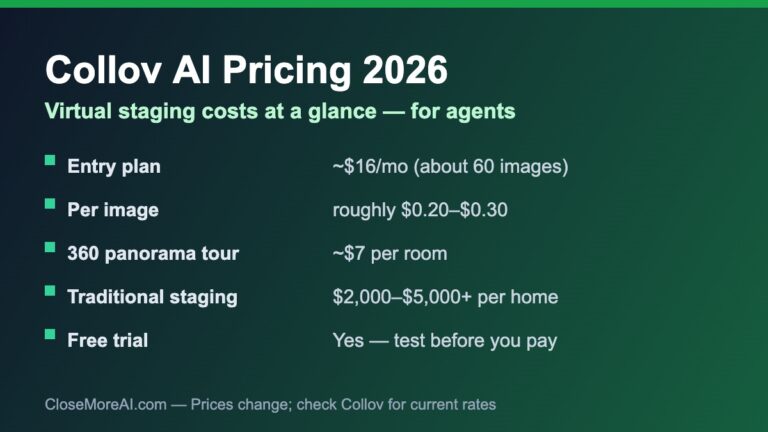
This is the headline difference and the reason virtual staging exploded. Physical staging typically runs $300–$800 per room, or roughly $2,000–$5,000 to stage an average full home for a listing cycle, and monthly furniture-rental fees stack up if the home sits. Virtual staging, by contrast, costs cents to a few dollars per image with AI tools, and even premium human-edited services top out around $24–$30 a photo. For a full breakdown of what the digital route runs, see our AI virtual staging cost guide, which compares AI, human-edited, and physical staging per image.
The practical takeaway: staging every empty listing physically is out of reach for most agents, but staging every empty listing virtually is affordable enough to do on all of them. That changes staging from a luxury reserved for your biggest listings into a standard step you apply to your whole book of business.
Try our top-pick AI virtual staging tool on one listing photo →
Speed and logistics
Traditional staging is a project. You book the stager, coordinate access, wait for delivery and installation, and reverse all of it after closing — often days or weeks end to end, and it only works while the furniture is physically in the home. Virtual staging is a file. You upload the empty-room photo, pick a style, and download a furnished image in seconds, then push it to the MLS and your marketing the same day. When a listing needs to go live fast — a relocation, a probate sale, a price-drop relaunch — the speed difference alone often decides it.
Flexibility follows from that. With virtual staging you can render the same living room in modern, farmhouse, or warm-traditional styles and match the look to your likely buyer, or re-stage instantly if the first feedback is lukewarm. Physical staging locks you into one look until you pay to change it.
When traditional staging still wins
Virtual staging is not a total replacement, and pretending otherwise burns trust. Physical staging still wins in a few clear cases:
- Luxury and trophy listings. High-end buyers tour in person and expect the home to feel lived-in and designed. An empty $3M house with only virtual photos can feel hollow at the showing.
- Homes that show poorly empty. Awkward layouts, echoey rooms, or spaces where buyers struggle to gauge scale benefit from real furniture they can walk around.
- In-person emotional connection. Staging isn’t only about photos; a beautifully dressed home creates a feeling on the walk-through that a digital photo can’t reproduce once the buyer is standing in an empty room.
The catch buyers notice most: virtual staging makes the photos gorgeous, but the house is still empty when they show up. If the online-to-in-person gap is jarring, that can work against you — which is exactly why matching the method to the property matters.
When virtual staging wins
For the majority of everyday listings, virtual staging is the higher-ROI choice:
- Vacant listings on a normal budget. You get scroll-stopping photos without a four-figure invoice.
- Speed-sensitive launches. Same-day furnished photos beat a two-week staging schedule.
- Volume. If you list regularly, virtual staging is cheap enough to apply to every property, not just the flagship one.
- Testing looks. Try multiple styles for the price of one and lead with whatever your buyer pool responds to.
Tool choice matters here: the quality gap between a cheap generic generator and a real-estate-built engine is the difference between “obviously fake” and “looks like a real photo.” We recommend Collov AI as our default because the renders respect the room’s architecture and lighting and the cost is a few dollars a listing — the reasoning is in our full Collov AI review. To compare the field, see our roundup of the best AI virtual staging tools for agents, and if you’re still deciding whether to stage at all, our data-backed take on whether virtual staging is worth it runs the ROI numbers.
Disclosure: the rule you can’t skip
Virtual staging has one obligation physical staging doesn’t: you must disclose it. Because the photo shows furniture that isn’t in the home, presenting it as an unlabeled real photo can be misleading, and most MLSs and state rules require virtually staged images to be clearly labeled. The National Association of REALTORS® Code of Ethics (Article 12) requires a true picture in advertising and marketing (NAR Code of Ethics), and Standard of Practice 12-10 specifically addresses honesty in online marketing. In practice that means:
- Label every virtually staged image — “virtually staged” — in the caption or on the photo itself.
- Never digitally add or hide permanent features (that’s misrepresentation, not staging).
- Follow your local MLS’s specific virtual-staging rules, which can be stricter than the baseline.
Done honestly, disclosed virtual staging is fully accepted and widely used. The rule isn’t a reason to avoid it — just a step to do it right.
How to choose for your listing
A simple rule of thumb: default to virtual staging for most listings, and reach for physical staging when the property or price point demands an in-person “wow.” Ask three questions:
- Will buyers decide mostly online or mostly in person? Online-first → virtual. In-person, high-touch → physical (or both).
- What’s the budget and the price point? Everyday listing on a tight marketing budget → virtual. Luxury with room in the budget → physical.
- How fast does this need to go live? Yesterday → virtual wins on speed alone.
Plenty of agents use both: virtual staging to make the online photos irresistible, and light physical staging or a stager’s touch for the showings on higher-end homes. For the full toolkit that supports a modern listing, see our complete, tested guide to the best AI tools for real estate agents.
FAQs
Is virtual staging cheaper than traditional staging?
Dramatically. Virtual staging costs roughly $0.25–$30 per photo depending on whether you use AI or a human-edited service, while physical staging typically runs $2,000–$5,000 to stage a full home for a listing cycle. For most agents that gap is the deciding factor.
Does virtual staging work as well as real staging?
For online photos and clicks, yes — buyers browse listings on their phones, and a well-done virtually staged photo performs just as well there. The difference is in person: physical staging furnishes the actual showing, while a virtually staged home is still empty when buyers walk through. Match the method to how buyers will experience the property.
Do I have to disclose virtual staging?
Yes. Virtually staged images should be clearly labeled “virtually staged,” and you must never digitally add or remove permanent features. Honest, disclosed virtual staging is widely accepted; misleading, unlabeled edits are not. Check your local MLS rules, which can be stricter.
Can I use both virtual and physical staging on one listing?
Absolutely, and many agents do. A common play is virtual staging for the online gallery to maximize clicks, plus light physical staging on higher-end homes so the in-person showing matches the photos.
Bottom line
The virtual staging vs traditional staging decision comes down to how buyers will experience the home and what your budget allows. For the vast majority of everyday listings — vacant homes, normal budgets, fast launches — virtual staging delivers photos that are just as clickable for a tiny fraction of the cost, and you can apply it to every listing instead of just your flagship one. Save physical staging for luxury and high-touch properties where the in-person feel earns the spend. Whichever you choose, disclose virtual images honestly, and let the photos do the work. Ready to try the digital route? Stage one of your listing photos with our top pick → and grab the free 2026 AI Toolkit for Real Estate Agents for the rest of the stack.
Related guides
- Is virtual staging worth it in 2026? — the ROI data behind the decision.
- How much does AI virtual staging cost? — per-image pricing for AI, human, and physical.
- Best AI virtual staging tools for agents — the full field, tested.